Location Intelligence for Retail
Confident Market Planning with Buxton’s Location Intelligence
Get a DemoLocation Intelligence for RetailConfident Market Planning with Buxton’s Location Intelligence
Get a Demo
Location Intelligence to Drive Your Retail Growth Strategy
Whether your goal is to open high-performing locations, define your total store growth potential, or maximize the return on your current stores, Buxton’s location intelligence solutions guide you along the path to success.
Score sites and analyze trade areas to inform your business decisions. Open high-performing locations close to your target customers and avoid expensive mistakes with our analytics tools and solutions.
Understand the optimal number of brick-and-mortar stores for your brand based on different performance thresholds and where those stores should be placed. Plan your strategic roadmap for growth.
Grow revenue by getting more out of your current stores. We can show you which of your stores are likely to deliver returns from additional investment, and our trade area insights will help you design strategies to improve performance.
Get the full picture of who your customers truly are – from demographics to lifestyles to media preferences – then find pockets of lookalike consumers. Use our customer profiles to make customer-centric growth decisions.
Why Leading Retailers Choose Buxton
Buxton Offers Deeper Insights for Retailers
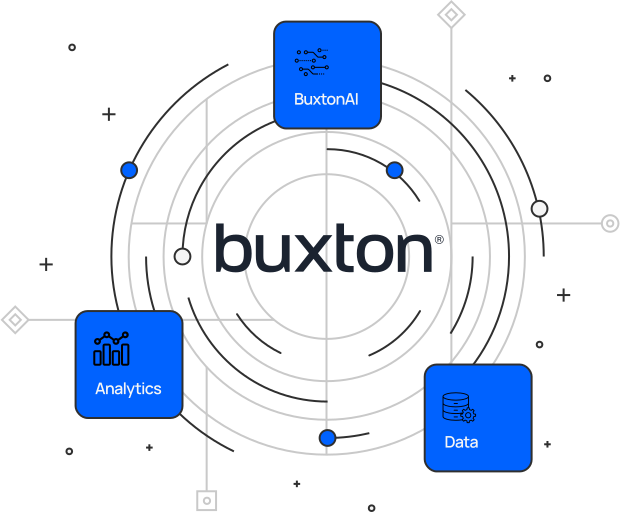
With hundreds of datasets and intelligence that's optimized by AI, Buxton offers the deep analysis you need to move your business forward. Our solutions are powered by Buxton Intelligence – a proprietary blend of data, analytics, and AI – that means you can make confident decisions to move your business forward.





Buxton is an Expert in Retail
Founded by retailers for retailers, Buxton has decades of experience advising retailers on their growth strategies using location intelligence and customer analytics.
"Buxton is the industry leader in the location intelligence space for a reason."

"The fact that Buxton came in and really became a partner in our business really set Buxton apart from other analytics firms that are out there."

"If you're a founder considering Buxton, it's worth it. You're getting your first locations in the best real estate and demographics. Understanding who your client is, is crucial, and Buxton provides unmatched data to help make those decisions."

Retailers Have a Track Record of Success with Buxton
Top retailers continue to choose Buxton as their location intelligence provider because our solutions produce results.